

Workplace safety is crucial for keeping employees safe, improving productivity, and helping a company succeed.
Whether it’s a busy office or a large warehouse, risks like people entering without permission or internal dangers can cause problems. That’s where electronic access control comes in. It’s a modern upgrade from old-fashioned locks and keys. Access control uses digital methods like keycards, fingerprint scans, or mobile apps to control who can go where and when.
But how exactly does Access control improve workplace safety?
This blog explains how Access control changes security practices.
Table of Contents
What Is Electronic Access Control?
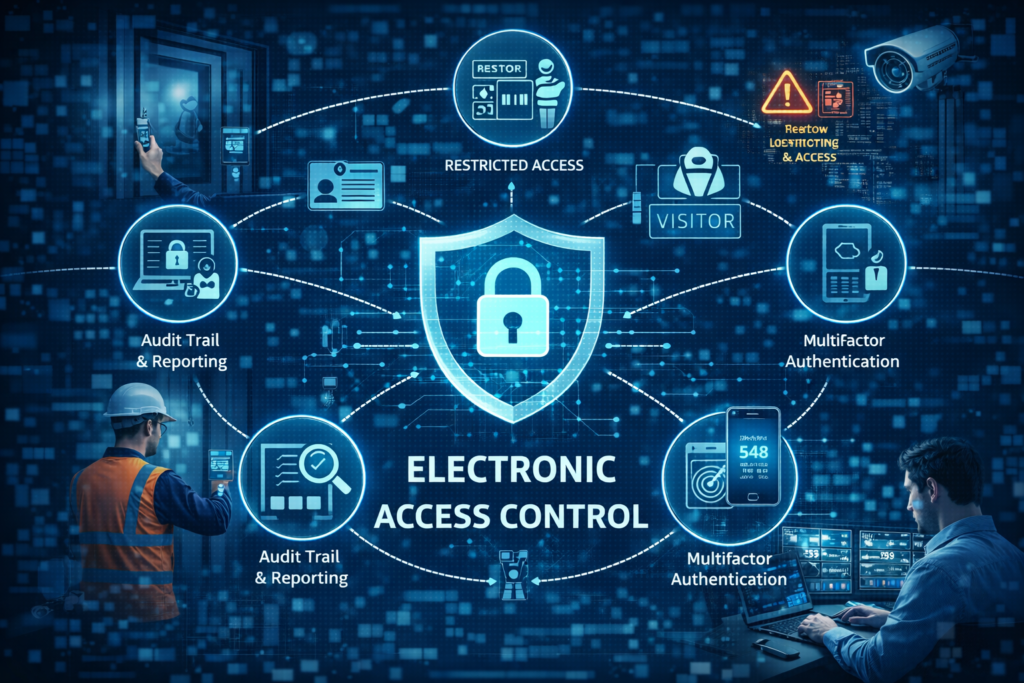
Electronic access control replaces physical keys with digital systems that check if someone is allowed in before letting them in. This includes readers that scan cards or fingerprints, controllers that process the information, and software to manage the whole system.
Unlike physical keys, which can be lost, copied, or stolen without leaving a trace. Access control offers multiple checks and keeps a record of who enters and when.
The need for Access control is growing because workplaces face more risks.
Access control helps by setting up a security system that stops problems before they happen. It’s not just about keeping unauthorized people out. It is also about making sure only the right people can access sensitive areas.
Stopping Unauthorized Access: The First Step in Safety
One way Access control improves safety is by controlling who can go where.
Traditional locks only let you in or out, but Access control allows for more detailed control. For instance, an employee in the marketing department might be allowed in the main lobby and their office. But not the server room or area with dangerous chemicals.
This kind of control lowers the chance of accidents caused by untrained people entering hazardous zones.
In manufacturing facilities, where heavy machinery is used, Access control can only let trained workers into certain areas, preventing injuries from improper use of equipment. Biometric systems, like fingerprint or facial recognition, add another level of security by making sure that people can’t share their access credentials, which is a common issue with physical keys.
Access control also helps stop outsiders from breaking in.
If there’s no keyhole, thieves can’t pick a lock. Instead, they have to face secure systems that trigger alerts if someone tries to enter without permission. In places like hospitals, Access control ensures that medicines and patient areas are protected, reducing the risk of theft or tampering that could harm people. By limiting access so that only people who need it can enter, Access control not only prevents crime but also encourages a sense of responsibility among employees, knowing that their movements are being tracked.
Enquire About Electronic Access Control
Tracking In Real Time: Seeing What's Happening
Beyond preventing problems, Access control also helps monitor what’s happening in real time.
Every time someone enters or leaves, the system records the event, making it easy to review if something goes wrong. For example, if there’s a chemical spill in a lab, the system can quickly identify who was there, speeding up the response and helping find responsibility.
This real-time tracking is also useful for predicting safety issues.
Access control software can analyze patterns to spot unusual behavior, such as someone trying to access an area they aren’t allowed to, which might signal an insider threat or a mistake due to tiredness. If an employee tries to enter outside their scheduled time, the system can send an alert to a supervisor, stopping potential accidents before they happen.
Having digital logs makes it easier to show that safety protocols are being followed, which reduces the chances of legal trouble. During audits, digital records are much more efficient than checking through physical logs. In the end, this real-time monitoring turns security from something passive into an active tool, where the data helps improve training and update safety policies continuously.
Working with Other Security Systems
Access control doesn’t work by itself; its real power comes from connecting with other systems.
Pairing Access control with CCTV cameras allows them to turn on automatically when someone enters, giving visual confirmation. If an unauthorized attempt happens, alarms go off, and doors lock right away.
In smart buildings, Access control works with lighting and HVAC systems to save energy, but it also boosts safety.
During a fire, these systems can unlock escape routes while keeping other areas secure to prevent looting. In cases like active shooters, Access control allows remote lockdowns and sends mobile alerts to guide people to safe areas.
IoT-enabled Access control systems use sensors to detect hazards like gas leaks and control access accordingly.
This creates a “security ecosystem” that keenly senses and prevents risks. For companies with operations in different countries, cloud-based Access control allows for central control of security across all locations, ensuring consistent safety standards everywhere.
Improving Emergency Response and Evacuation
When emergencies happen, quick action is key.
Access control helps by giving accurate information about how many people are inside a building. Emergency teams can use mobile apps to know the exact number of people and where they are.
Features like “mustering” use Access control to track evacuations—employees scan out at assembly points, and the system flags anyone who is missing.
This is especially helpful in large buildings where manual headcounts are hard to do. In schools or offices, Access control can be linked with panic buttons, instantly alerting emergency services and locking down areas.
After an incident, Access control data helps with reviewing what happened.
By analyzing entry logs, it’s possible to spot issues in evacuation routes and make them better. In industries like oil and gas, where explosions are a risk, Access control ensures only certified workers enter dangerous areas and helps secure areas quickly during emergencies.
Promoting Compliance and Employee Well-Being
Safety isn’t just about staying safe physically—it’s also about feeling safe mentally.
When employees know that Electronic Access Control (Access control) is in place, they feel more secure, which helps keep them motivated and less likely to leave. It also helps companies follow important rules like GDPR, because Access control makes sure that sensitive information is only accessed by the right people and is regularly checked for security.
For teams that work both in the office and from home, Access control makes it easy to control who has access to certain areas through mobile apps instead of physical badges.
This was especially helpful during the pandemic, when fewer people were in the office and it was important to limit contact. Access control helped manage how many people were in a space and also made it easier to track who was where.
From a financial perspective, Access control can save money too.
By showing that the company is taking steps to reduce risks, Access control can lead to lower insurance costs. Insurance companies often give discounts for businesses that have strong security systems, since they’re less likely to face claims from accidents or thefts.
Real-World Examples and Future Trends
Take Amazon, for example.
They use Access control in their warehouses to protect workers from areas with robots, which has helped reduce the number of accidents. Hospitals also use Access control in sensitive areas like neonatal units, where biometric access helps prevent unauthorized people from entering and possibly harming babies.
Looking to the future, Access control is getting smarter.
AI will be used to spot potential security issues before they happen, using machine learning to predict threats. Blockchain technology might also be used to make sure access credentials are secure and can’t be faked. As more work happens remotely, Access control systems are likely to expand to manage digital access too, keeping watch over who enters a company’s network.
Conclusion
Electronic Access Control is a big change for workplace safety.
It helps prevent problems, keeps track of what’s happening, works with other systems, and responds quickly to issues in ways that old systems can’t. By stopping people from entering without permission, offering up-to-the-minute information, and working well with other tools, Access control lowers risks and creates a safer, more efficient workplace. As the world changes and new threats come up, Access control is something every smart company should consider. Whether you run a small business or a huge company, investing in Access control now helps protect your future. Are you ready to make your workplace better? Start by looking at your current system and exploring new, modern solutions. Contact Electrocore Systems today and experience connectivity that drives real results.
Enquire About Electronic Access Control
Frequently Asked Questions
An electronic access control system is a security solution that regulates who can enter specific areas of a workplace using credentials like key cards, biometrics, or mobile apps. It ensures that only authorized individuals can access restricted zones, improving overall security.
Access control systems enhance safety by preventing unauthorized entry, reducing risks like theft, workplace violence, and data breaches. They also allow businesses to monitor who enters and exits in real time, enabling quick response to potential threats.
Yes, these systems play a crucial role in emergencies. They can enable quick lockdowns, track who is inside the building, and assist in safe evacuations by providing real-time data to emergency responders.
Modern systems include features like biometric authentication, role-based access, real-time monitoring, audit logs, and remote access management. These features provide higher security, flexibility, and better control over workplace entry points.
Yes, electronic access control systems are more secure and efficient than traditional locks. They eliminate issues like lost keys, allow instant access updates, and provide detailed tracking of entry activity, making workplaces safer and easier to manage.