

In today’s quick-moving business world, security isn’t just something you need—it’s a valuable tool that helps you grow. Whether it’s stores watching out for theft or warehouses keeping track of goods, surveillance systems are key to keeping things safe, protecting workers, and making operations run better. For a long time, analog cameras were the go-to choice because they were easy to use and worked reliably. But things are changing fast. More and more companies are moving to IP cameras, which are also called network cameras. These modern cameras use the internet to provide better performance, easier expansion, and smart features. You might be wondering why businesses are switching. In this blog, we’ll explain the main differences between IP and analog cameras, highlight the benefits that are making this shift popular, and show how it could affect your business. By the end, you’ll see why staying with analog technology might be holding you back in 2026.
Table of Contents
Understanding Analog Cameras: The Traditional Workhorse
Analog cameras have been the mainstay of surveillance since the middle of the 20th century. They work by taking in video through a lens and turning it into electrical signals, which are sent through coaxial cables to a Digital Video Recorder (DVR). The DVR then converts these signals into digital format and saves the video for later use. This setup is simple and has worked well for small businesses looking for basic security monitoring. One of the main reasons people still use analog systems is because they are cost-effective.
Setting them up doesn’t cost much, making them great for places that want to keep expenses low, like small stores or home offices. They are also easy to install and don’t need a lot of technical know-how. Since the video isn’t processed digitally at the source, they use less bandwidth. Plus, analog cameras are built to last and work well in tough conditions, needing very little maintenance, which is why they are often used in industrial environments. But analog technology has its downsides.
The picture quality is usually limited to standard definition, which is around 720×480 pixels. This can make images look grainy or unclear, making it hard to see details like faces or license plates. If you try to zoom in, the image becomes pixelated, which can reduce the usefulness of the footage as evidence. Expanding an analog system requires more cables and equipment, which can get complicated and pricey as your business grows. In today’s world, where data is key for making decisions, analog cameras don’t offer much in terms of smart features or the ability to connect with other systems.
What Are IP Cameras? The Digital Revolution
IP cameras show how surveillance technology has evolved. Unlike older analog cameras, these digital cameras convert video into a digital format right at the camera and send it over a network, usually through Ethernet or Wi-Fi, using the Internet Protocol. This lets them connect directly to a Network Video Recorder (NVR) or even to the cloud, so you don’t need special coaxial cables. Each IP camera works like a small computer, with its own IP address, processing ability, and often comes with software that gives it smart features.
The move toward IP cameras started gaining speed in the early 2000s, but by 2026, they have become the norm for businesses.
These cameras offer high-definition video, from 1080p HD up to 4K and even higher, giving clear images that are important for today’s security needs. They can also be powered over Ethernet (PoE), which makes installation easier by using one cable for both power and data. Wireless models add more flexibility, letting you place cameras in tricky spots without needing a lot of wiring.
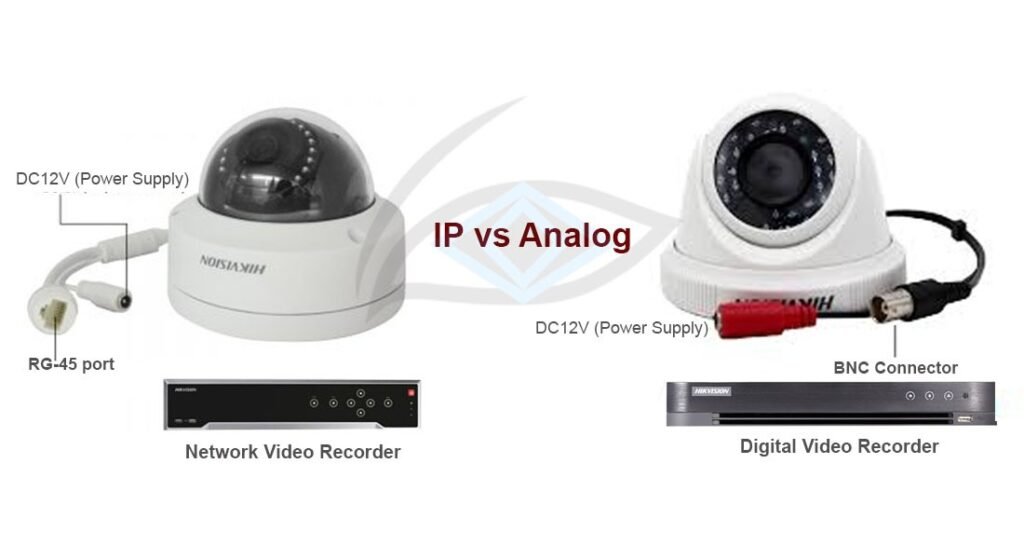
Key Differences: A Side-by-Side Comparison
To appreciate why businesses are migrating, let’s break down the core differences:
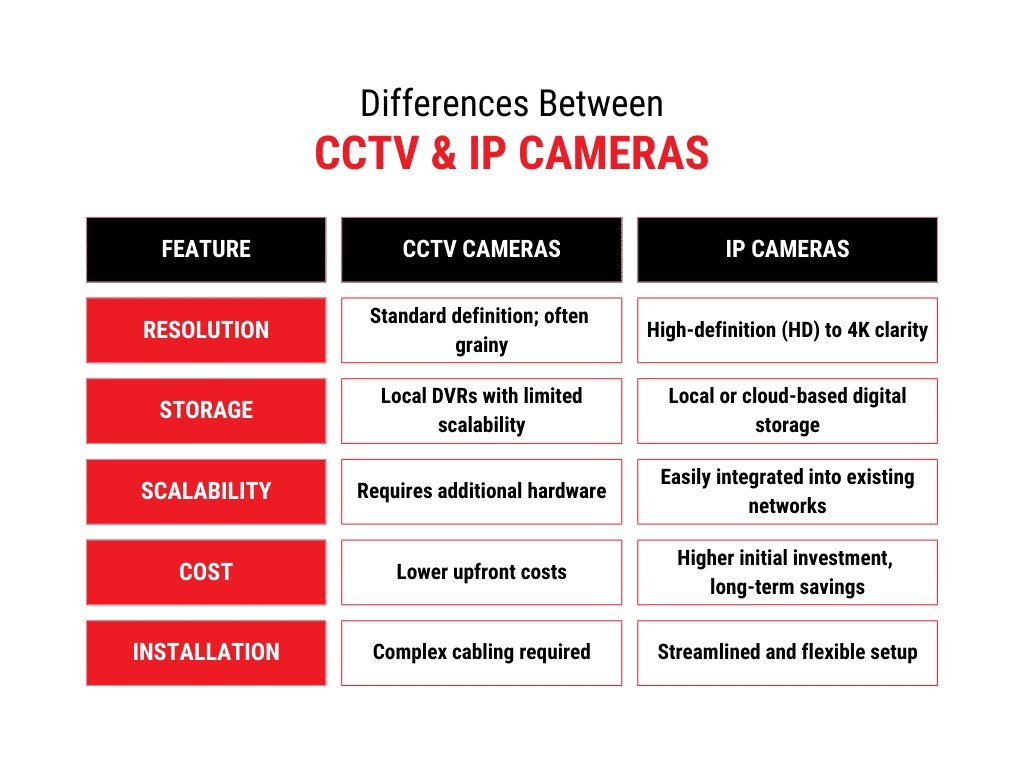
As shown in the comparison, IP cameras outshine analog in nearly every category relevant to growing businesses. While analog might suffice for a static, small-scale setup, IP systems are designed for the dynamic demands of contemporary operations
Why Modern Businesses Are Switching: The Compelling Advantages
The shift to IP cameras is more than just a passing fad—it’s driven by real advantages that support business goals such as efficiency, security, and cost savings.
- Superior Image Quality and Analytics: In today’s world where every detail counts, IP cameras provide high-resolution video that analog cameras can’t match. These cameras offer zoom features up to 30 times without losing picture quality, helping to clearly spot intruders or check how hard employees are working. They also include smart features like facial recognition and motion detection, which send automatic alerts, cutting down on the need for someone to watch constantly. For stores, this helps catch theft faster, and for factories, it ensures workers follow safety rules.
- Scalability and Flexibility: As companies grow—by opening new offices or adding more locations—IP systems can easily expand. Adding more cameras is simple; you just connect them to the existing network, without needing to rewire everything. This is especially helpful for big companies with multiple sites, as they can manage everything from one central location using cloud-based platforms, giving them a complete view from a single screen.
- Remote Access and Integration: Remote access and integration are important for today’s leaders who need to monitor things from anywhere. IP cameras allow real-time viewing on smartphones, tablets, or computers, no matter where you are. Connecting these cameras with other smart devices, such as access control systems or alarm systems, makes a complete security setup. This ability to work together is essential for businesses that use AI to look for patterns and foresee possible problems.
- Cost Efficiency Over Time: While analog cameras have lower upfront costs, IP systems prove cheaper in the long run. Reduced cabling (up to 50-60% savings) and lower maintenance needs offset the initial investment. Energy-efficient PoE reduces power bills, and cloud storage eliminates the need for bulky on-site servers. An independent survey showed that for systems with 14+ cameras, IP setups were more cost-effective overall.
- Enhanced Security and Reliability: IP cameras support encryption and secure protocols, protecting against cyber threats— a growing concern in 2026. They also offer redundancy through cloud backups, ensuring footage isn’t lost in hardware failures. For industries like healthcare or finance, where compliance is mandatory, these features are non-negotiable.
Challenges and Considerations When Making the Switch
Of course, no transition comes without challenges. The higher upfront cost of IP cameras may discourage some, especially if they already have existing analog systems in place. Setting them up might need IT skills to set up the network, and the increased bandwidth usage could mean upgrading the Wi-Fi. Security is also a concern; without good protection, these connected cameras could be targets for hackers.
To handle these issues, businesses should start by understanding their needs.
One option is to begin with a hybrid setup that connects new IP cameras with old analog cameras using encoders. Working with trusted vendors can help make the process run smoothly and provide continued support.
Conclusion: Embrace the Future of Surveillance
In summary, the switch from analog to IP cameras is fueled by the need for smarter, more efficient security in a digital age. While analog systems offer simplicity and low entry costs, they fall short in resolution, scalability, and features that modern businesses demand. IP cameras, with their high-definition clarity, remote capabilities, and analytical prowess, not only enhance security but also drive operational insights and long-term savings. As threats evolve and technology advances, clinging to outdated analog tech risks leaving your business exposed and inefficient.
If you’re still using analog cameras, now is the time to evaluate an upgrade. Consult with a security expert to tailor an IP solution to your needs. The investment today could safeguard your tomorrow, ensuring your business thrives in an increasingly connected world. Contact Electrocore Systems today and experience connectivity that drives real results.