

In today’s hyper-connected digital landscape, businesses rely on robust, scalable, and secure networks to power their operations. Cloud network solutions have emerged as the backbone of modern IT infrastructure, enabling organizations to connect users, applications, data centers, and cloud resources seamlessly. Whether you’re a growing enterprise in Bengaluru or a large corporation expanding across India, understanding cloud networking is essential for staying competitive, reducing costs, and ensuring business continuity.
Cloud networking refers to the use of cloud-based services to deploy, manage, and optimize corporate networks. It connects employees, applications, workloads, and resources across on-premises environments, public clouds, private clouds, and edge locations. Unlike traditional networking, which depends heavily on physical hardware and manual configurations, cloud networking leverages virtualization, software-defined principles, and automation for greater flexibility and efficiency.
Table of Contents
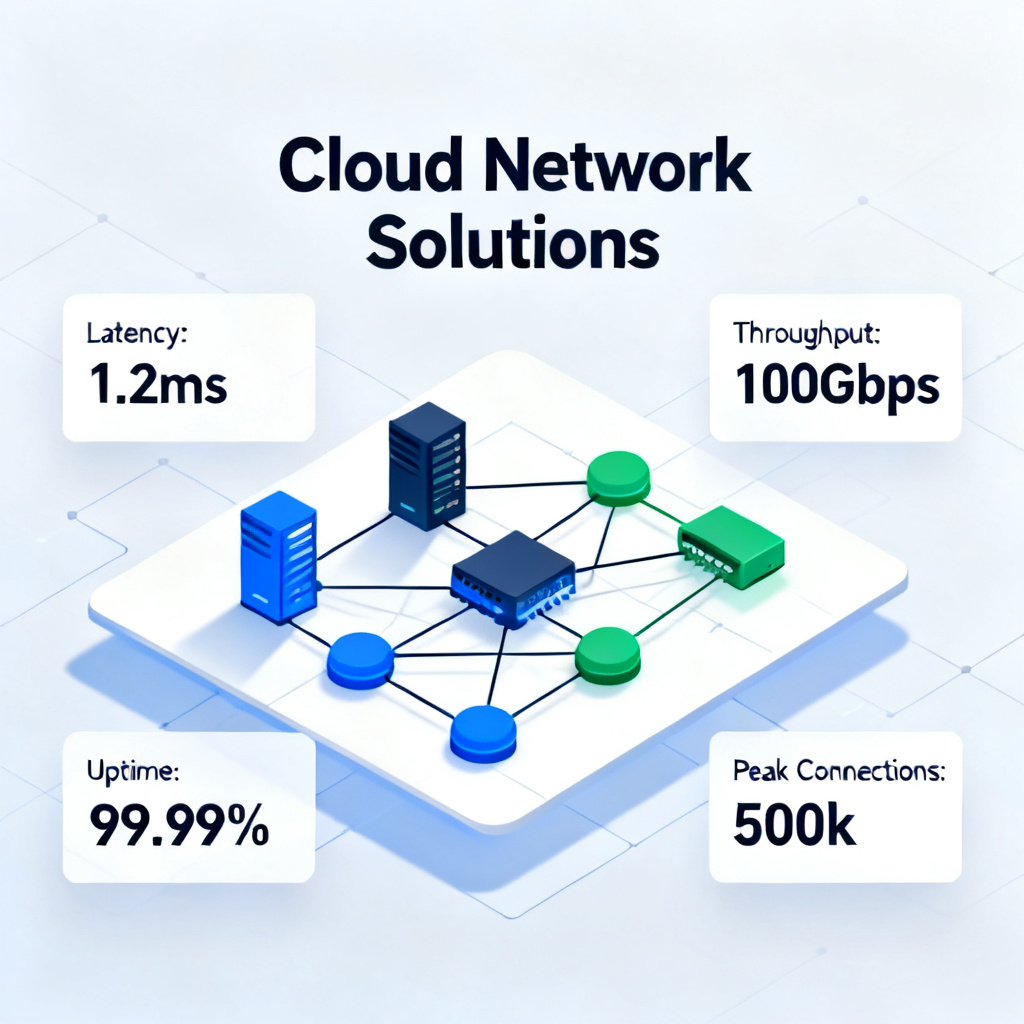
Why Cloud Network Solutions Matter in 2026
The shift to cloud networking accelerated during the remote work boom and continues to evolve with AI, edge computing, and hybrid work models. In 2026, organizations face exploding data volumes, multi-cloud strategies, and stringent security demands. Cloud networks address these by offering on-demand scalability, pay-as-you-go economics, and centralized management.
Key drivers include:
- Scalability: Easily handle traffic spikes without over-provisioning hardware.
- Cost Efficiency: Reduce capital expenditure (CapEx) on physical routers, switches, and data centers by moving to operational expenditure (OpEx) models.
- Agility: Provision network resources in minutes rather than weeks.
- Global Reach: Support distributed teams and applications with low-latency connections worldwide.
- Security and Compliance: Built-in features like zero-trust access, encryption, and automated threat detection.
For Indian businesses, especially in tech hubs like Bengaluru, cloud networking supports digital transformation initiatives under programs like Digital India, while addressing challenges such as reliable connectivity in diverse geographies.
Types of Cloud Network Solutions
Cloud networking comes in several architectures, each suited to different business needs:
- Public Cloud Networking: Resources are hosted on shared infrastructure from providers like AWS, Microsoft Azure, or Google Cloud. Ideal for startups and variable workloads, it offers high scalability but requires strong security configurations.
- Private Cloud Networking: Dedicated infrastructure for a single organization, often on-premises or hosted. It provides maximum control, compliance, and security, making it suitable for finance, healthcare, and government sectors.
- Hybrid Cloud Networking: Combines public and private clouds, allowing sensitive data to stay on-premises while leveraging public cloud for burst capacity or less critical apps. This model dominates 2026 deployments due to its balance of flexibility and control.
- Multi-Cloud Networking: Uses multiple public cloud providers simultaneously to avoid vendor lock-in, optimize costs, and access best-of-breed services. Over 87% of enterprises now adopt multi-cloud strategies.
- SD-WAN (Software-Defined Wide Area Network): A critical cloud networking technology that intelligently routes traffic across MPLS, broadband, LTE, or 5G links. SD-WAN extends seamlessly into multi-cloud environments, providing application-aware routing, centralized policy management, and direct cloud access (Cloud OnRamp). It dramatically improves performance for SaaS applications and hybrid setups while reducing costs compared to traditional WAN.
Other emerging components include Secure Access Service Edge (SASE), which converges networking and security in the cloud, and Network as a Service (NaaS) for subscription-based consumption.
Know About Cloud network
How Cloud Network Solutions Work
At its core, cloud networking uses a software-defined control plane to manage a distributed data plane. Virtual networks (like VPCs in AWS or VNets in Azure) isolate traffic, while tools handle routing, load balancing, firewalls, and peering.
Key technologies:
- Virtual Private Cloud (VPC) and peering for secure internal connectivity.
- Direct Connect / ExpressRoute for private, high-bandwidth links between on-premises and cloud.
- Automation and IaC (Infrastructure as Code): Tools like Terraform or cloud-native services enable consistent, repeatable deployments.
- AI-Driven Optimization: In 2026, AI enhances traffic routing, predictive maintenance, and anomaly detection.
For example, an enterprise can use SD-WAN to connect branch offices directly to multiple clouds, bypassing the corporate data center for better performance and resilience.
Benefits of Adopting Cloud Network Solutions
Organizations migrating to cloud networking report significant gains:
- Reduced Costs: Up to 30-50% savings on networking expenses through optimization and elimination of hardware refreshes.
- Improved Performance: Lower latency via direct cloud peering and intelligent path selection.
- Enhanced Security: Features like micro-segmentation, zero-trust network access (ZTNA), and integrated firewalls protect against evolving threats.
- Business Continuity: Built-in redundancy and automatic failover ensure high availability.
- Faster Innovation: IT teams spend less time on maintenance and more on strategic initiatives.
In hybrid environments, cloud networking simplifies management of complex setups involving on-premises VoIP systems, IP telephony, unified communications, and collaboration tools.
Challenges and Best Practices
Despite the advantages, challenges exist:
- Complexity in Multi-Cloud: Managing policies, visibility, and costs across providers.
- Security Risks: Expanded attack surface if not properly configured.
- Skills Gap: Need for expertise in cloud-native networking.
- Data Sovereignty and Compliance: Especially relevant in India with regulations around data localization.
Best practices include:
- Start with a clear strategy: Assess workloads and choose hybrid/multi-cloud where appropriate.
- Prioritize security: Implement zero-trust and SASE from day one.
- Leverage automation for provisioning and monitoring.
- Monitor costs with FinOps practices.
- Partner with experienced integrators for seamless deployment.
Cloud Networking Trends in 2026
Looking ahead, several trends are shaping the future:
- AI Integration: AI optimizes routing, automates security responses, and predicts network needs.
- Edge Computing: Processing data closer to users for ultra-low latency in IoT and real-time applications.
- SASE and Zero-Trust Adoption: Converging networking with advanced security.
- Sustainability Focus: Energy-efficient cloud infrastructures and green networking practices.
- Programmable and Intent-Based Networking: Networks that adapt automatically based on business intent.
Hybrid and multi-cloud architectures continue to grow, with increased emphasis on seamless connectivity between on-premises, edge, and multiple clouds.
How Electrocore Systems Supports Your Cloud Networking Journey
While cloud networking is inherently virtual, successful implementation often requires strong on-premises foundations and expert integration. Electrocore Systems, based in India, excels in delivering end-to-end IP-based networking solutions that complement and enable robust cloud strategies.
Their expertise in high-performance networking switches, Wi-Fi access points, VoIP and unified communications (UC-IPPBX), IP paging, video door phones, and smart home/enterprise automation creates a seamless bridge between traditional infrastructure and the cloud. Whether you’re building hybrid environments for hospitality, education, finance, retail, or residential projects, Electrocore ensures reliable connectivity, security, and scalability.
They handle full project lifecycles—from consulting and design to installation, commissioning, and ongoing support—while integrating with existing networks. Partnering with global technology brands, Electrocore delivers customized solutions tailored to your business size and goals. Their local presence ensures quick response times, making them an ideal partner for Bengaluru and pan-India deployments looking to modernize communication ecosystems alongside cloud adoption.
By combining Electrocore’s networking hardware and integration prowess with cloud platforms, organizations achieve unified voice, video, and data experiences with enhanced security and performance.
Conclusion
Cloud network solutions represent far more than a technology upgrade they are a strategic enabler for digital transformation, operational resilience, and sustainable growth. In 2026 and beyond, businesses that master hybrid, multi-cloud, and SD-WAN architectures will gain significant competitive advantages through agility, cost savings, and superior user experiences.
However, success depends on careful planning, robust security, and expert implementation. Partnering with specialists who understand both traditional networking and modern cloud ecosystems is crucial. Electrocore Systems stands ready to support your journey with reliable, scalable IP networking solutions that integrate seamlessly into cloud environments, helping you build intelligent, future-ready communication infrastructures.
Ready to future-proof your network? Explore tailored cloud networking and integration solutions that align with your business objectives. Contact the team at Electrocore Systems today via their website to discuss how they can help transform your connectivity landscape.
Know About Cloud network
Frequently Asked Questions
Cloud Network Solutions refer to the use of cloud-based technologies to design, deploy, manage, and optimize an organization’s network infrastructure. Instead of relying solely on physical hardware, cloud networking uses virtual networks, Software-Defined Networking (SDN), SD-WAN, and cloud-native services to connect users, applications, data centers, and multiple clouds securely and efficiently.
Traditional networking depends on physical routers, switches, and manual configurations, which are rigid, expensive, and time-consuming to scale. Cloud Networking, on the other hand, is software-defined, highly automated, and scalable. It allows businesses to provision network resources in minutes, reduce hardware costs, improve performance through intelligent routing, and easily integrate with public, private, or hybrid cloud environments.
Any business undergoing digital transformation can benefit from cloud networking. This includes IT companies, startups, educational institutions, hospitals, hotels, manufacturing units, retail chains, and enterprises with multiple branch offices in Bengaluru and across India. Organizations dealing with remote work, heavy SaaS usage, or hybrid work models particularly gain the most from SD-WAN and hybrid cloud networking solutions.
Modern cloud network solutions come with built-in advanced security features such as Zero Trust Network Access (ZTNA), micro-segmentation, encrypted connections, AI-powered threat detection, and Secure Access Service Edge (SASE). These features provide better visibility, faster threat response, and consistent security policies across on-premises, cloud, and edge environments compared to traditional setups.
SD-WAN (Software-Defined Wide Area Network) is a key cloud networking technology that intelligently routes traffic across multiple connections (MPLS, broadband, 5G, etc.) to deliver optimal performance for cloud applications. It reduces dependency on expensive MPLS lines, lowers costs, improves application performance, and enables direct, secure access to multiple cloud platforms making it essential for hybrid and multi-cloud strategies.
Electrocore Systems provides expert end-to-end support for cloud networking adoption. From designing hybrid cloud architectures and implementing high-performance networking infrastructure to integrating SD-WAN, VoIP, unified communications, and secure connectivity solutions, we ensure seamless integration between your existing network and cloud environments. With strong local expertise in Bengaluru and pan-India project execution, Electrocore helps businesses achieve reliable, scalable, and future-ready cloud network solutions.