

When we think about building security, the conversation often revolves around perimeter fencing, CCTV surveillance, biometric entry gates, and visitor management systems. These are all critical layers of protection but there is one area that has remained surprisingly overlooked for far too long: elevator access control.
Elevators are not merely transportation tools within a building. They are gateways to every floor, every department, and every sensitive zone. An unsecured elevator is essentially an open invitation for unauthorized individuals to roam freely through an entire facility. As modern buildings grow taller, smarter, and more complex, elevator access control is rapidly becoming one of the most critical components of a comprehensive security strategy.
Table of Contents
The Hidden Security Gap in Most Buildings
Many organizations invest heavily in securing their main entrances with access cards, facial recognition, or PIN-based systems. Yet once a person passes through the front door authorized or not they often gain unrestricted access to every floor via the elevator. This is a fundamental security gap.
Consider a multi-tenant commercial building housing a bank, a law firm, a healthcare provider, and a tech company. Each of these organizations has unique confidentiality requirements. Without floor-level elevator access control, a visitor authorized only for the bank on the ground floor could easily press the button for the top-floor data center or the executive boardroom. The consequences of such a breach can be severe ranging from corporate espionage and data theft to physical safety risks.
What Is Elevator Access Control?
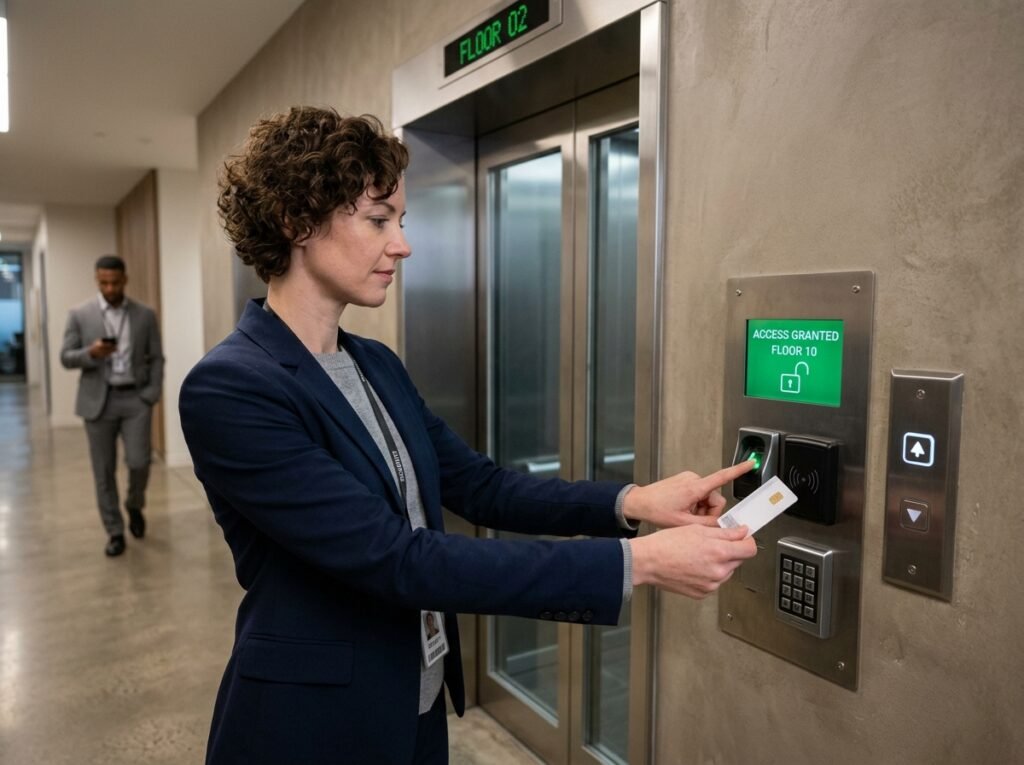
Elevator access control is a security system that integrates with your building’s lift infrastructure to restrict which floors a user can access and when. Using technologies such as RFID cards, mobile credentials, biometrics, or PIN codes, the system grants or denies floor selection based on the individual’s pre-configured permissions.
For example, a junior employee might be authorized to access the ground floor, their department’s floor, and the cafeteria. A senior manager may have access to those same floors plus the server room and the executive suite. Security personnel might have complete access across all floors, while a delivery person may be restricted to the lobby and loading dock.
This granular, role-based access not only prevents unauthorized entry but also creates a detailed audit trail recording who went where and at what time.
Know About Smart Access Control
Why Elevator Access Control Is Becoming Essential
- Rise of Smart and Hybrid Buildings
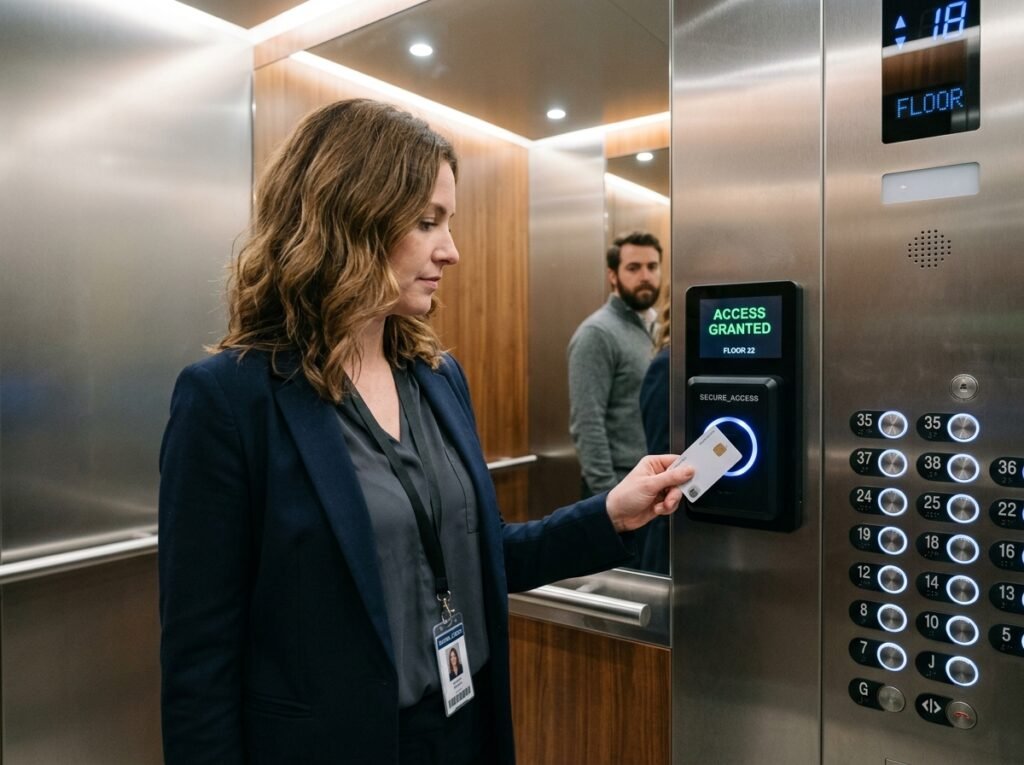
Modern buildings are smarter than ever before. Building Management Systems (BMS) now integrate HVAC, lighting, fire safety, and security into a single unified platform. Elevator access control fits naturally into this ecosystem, enabling facility managers to control and monitor vertical movement just as they manage any other building system. As smart building adoption accelerates across India and globally, elevator security is a logical and necessary next step.
- Increasing Threats to Physical Security
Workplace incidents, insider threats, and corporate espionage are on the rise. Restricting access to sensitive floors is one of the most effective ways to minimize risk. When employees, visitors, and contractors are automatically limited to only the areas they need, the attack surface for any potential threat is dramatically reduced.
- Compliance and Regulatory Requirements
Industries such as healthcare, banking, and pharmaceuticals operate under strict regulatory frameworks that mandate access control and data protection. Elevator access systems provide the documentation and audit trail required for compliance with standards such as ISO 27001, HIPAA, and various industry-specific regulations in India. Having a traceable record of who accessed which floor and when is invaluable during audits and investigations.
- Integration with Existing Security Infrastructure
Advanced elevator access control systems are designed to integrate seamlessly with existing security platforms including CCTV, intrusion detection systems, visitor management systems, and HR software. When an access card is deactivated in the HR system upon an employee’s resignation, that deactivation can automatically extend to elevator permissions across the building, ensuring no lingering access vulnerabilities.
Key Features of a Robust Elevator Access Control System
Not all elevator access control solutions are created equal. When evaluating a system, here are the features that matter most:
Floor-by-floor access permissions: Each user or user group should have configurable access to specific floors only.
Time-based restrictions: Access should be grantable for specific hours and days, ideal for after-hours security.
Multi-credential support: The best systems support RFID cards, mobile apps, biometrics, and PIN codes.
Real-time monitoring and alerts: Security teams should receive instant notifications of unauthorized access attempts.
Comprehensive audit logs: A complete record of all elevator usage, exportable for compliance and investigations.
Real-World Applications: Who Benefits the Most?
Elevator access control is not a luxury reserved for the largest corporations. It delivers measurable value across a wide range of facilities:
Corporate offices: Protecting executive floors, server rooms, and finance departments from unauthorized entry.
Hospitals and healthcare facilities: Ensuring only authorized staff can access ICUs, pharmacies, and patient record rooms.
Residential high-rises: Limiting residents’ elevator access to their own floor, reducing crime and ensuring privacy.
Educational institutions: Restricting student access to administrative areas, labs, and research facilities.
Hotels: Allowing guests to access only their own floor, enhancing safety and guest privacy.
The Future: AI-Powered and Touchless Elevator Security
The future of elevator access control is being shaped by artificial intelligence, facial recognition, and the Internet of Things (IoT). Next-generation systems will use predictive analytics to detect anomalous movement patterns, automatically flagging unusual behavior such as repeated access attempts on restricted floors.
Touchless access already gaining momentum post-pandemic allows users to authenticate via mobile credentials or facial recognition without ever pressing a button. This not only improves hygiene but significantly reduces the risk of credential sharing or card cloning. As these technologies mature, elevator access control will become a dynamic, intelligent layer of building security rather than a static set of rules.
Conclusion
Building security is only as strong as its weakest access point and for far too many facilities, that weak point is the elevator. As buildings become smarter, threats become more sophisticated, and compliance requirements become more stringent, elevator access control is no longer an optional upgrade. It is an essential component of any serious security infrastructure.
At ElectroCore Systems, we specialize in designing and deploying integrated security solutions tailored to the unique needs of your facility including advanced elevator access control systems that work seamlessly with your existing infrastructure. Whether you manage a corporate tower, a healthcare campus, a residential complex, or a government facility, we have the expertise and technology to take your building security to the next level.
Ready to elevate your building’s security? Contact Electrocore Systems today for a free consultation.